
Ceramics UK was pleased to contribute to the Institute of Refractories Engineers (IRE) UK Conference 2026, held in Sheffield last week, supporting important discussions around industry skills, international trade and the future competitiveness of UK refractory manufacturing.
The annual conference, held from the 17th - 19th November, brought together refractory engineers, manufacturers, researchers and suppliers to share technical knowledge, explore industry developments and strengthen collaboration across the sector.
Ceramics UK played an active role throughout the conference programme and accompanying training sessions, with contributions from Lee Brownsword, Rachel Timmins and Andrew McDermott.
Supporting Industry Skills Through New Refractories Training
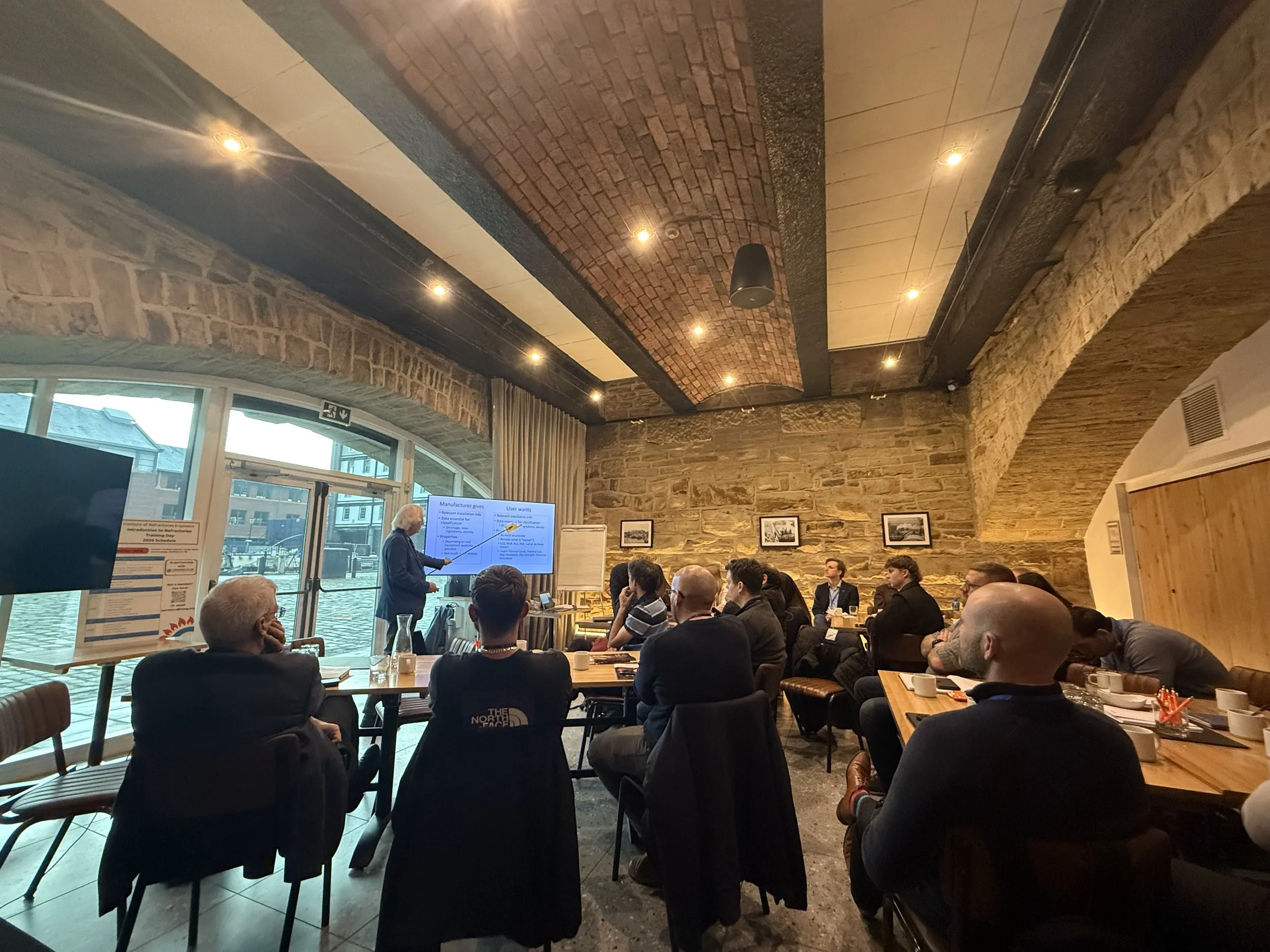
A key highlight was the introduction of a new 'Refractories Basics: Production, Properties & Uses' training course, delivered by IRE in association with Ceramics UK on 17th November.
The introductory session attracted excellent attendance, with representatives from Ceramics UK member companies and other organisations taking the opportunity to develop their knowledge of refractory materials and manufacturing.
The course covered a broad range of topics, including refractory product types, raw material inputs, production techniques, material properties and end-use applications.
Reflecting on the session, Lee Brownsword, Associate Director at Ceramics UK, commented:
"The training was a great introduction to refractories covering product types, raw material inputs, production techniques and end-use applications. Thanks to all involved from the IRE in delivering this well-received session."
The strong attendance highlighted the value of accessible technical training and continued professional development in supporting skills across the refractory industry.
Examining International Trade and Market Trends
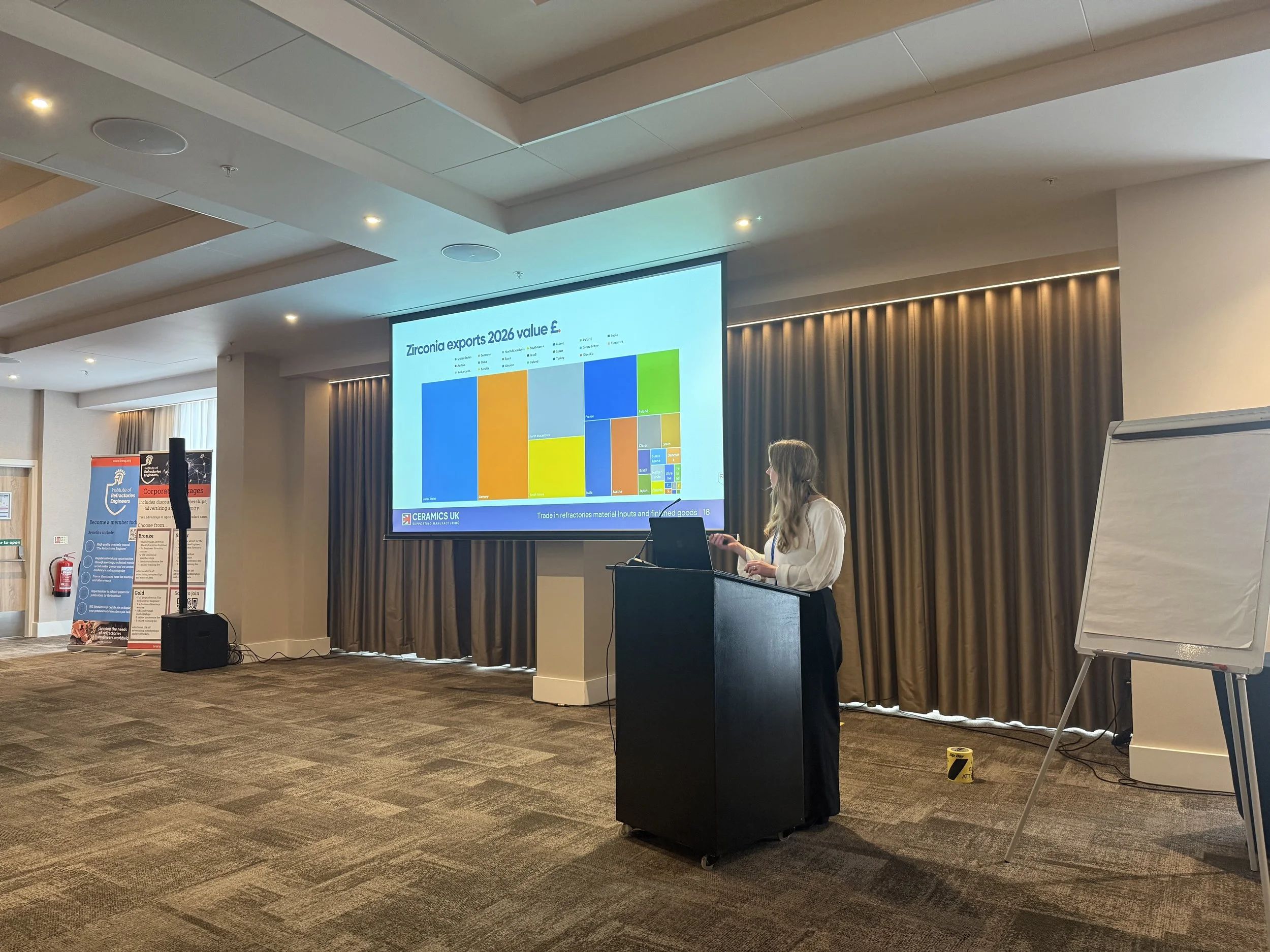
Rachel Timmins, Policy Manager at Ceramics UK, delivered a presentation exploring international trade statistics for four of the principal raw material inputs used in refractory manufacturing.
The presentation highlighted silica as a major traded input and examined developments in the international market, including concerning trends relating to imports of finished refractory products from Turkey.
Rachel also explored relevant cases investigated by the UK's Trade Remedies Authority, providing valuable insight into the trade challenges and competitive pressures facing domestic manufacturers.
The session reinforced the importance of monitoring international trade trends and ensuring UK manufacturers can compete fairly in an increasingly challenging global marketplace.
Securing a Competitive and Sustainable Future for UK Ceramics
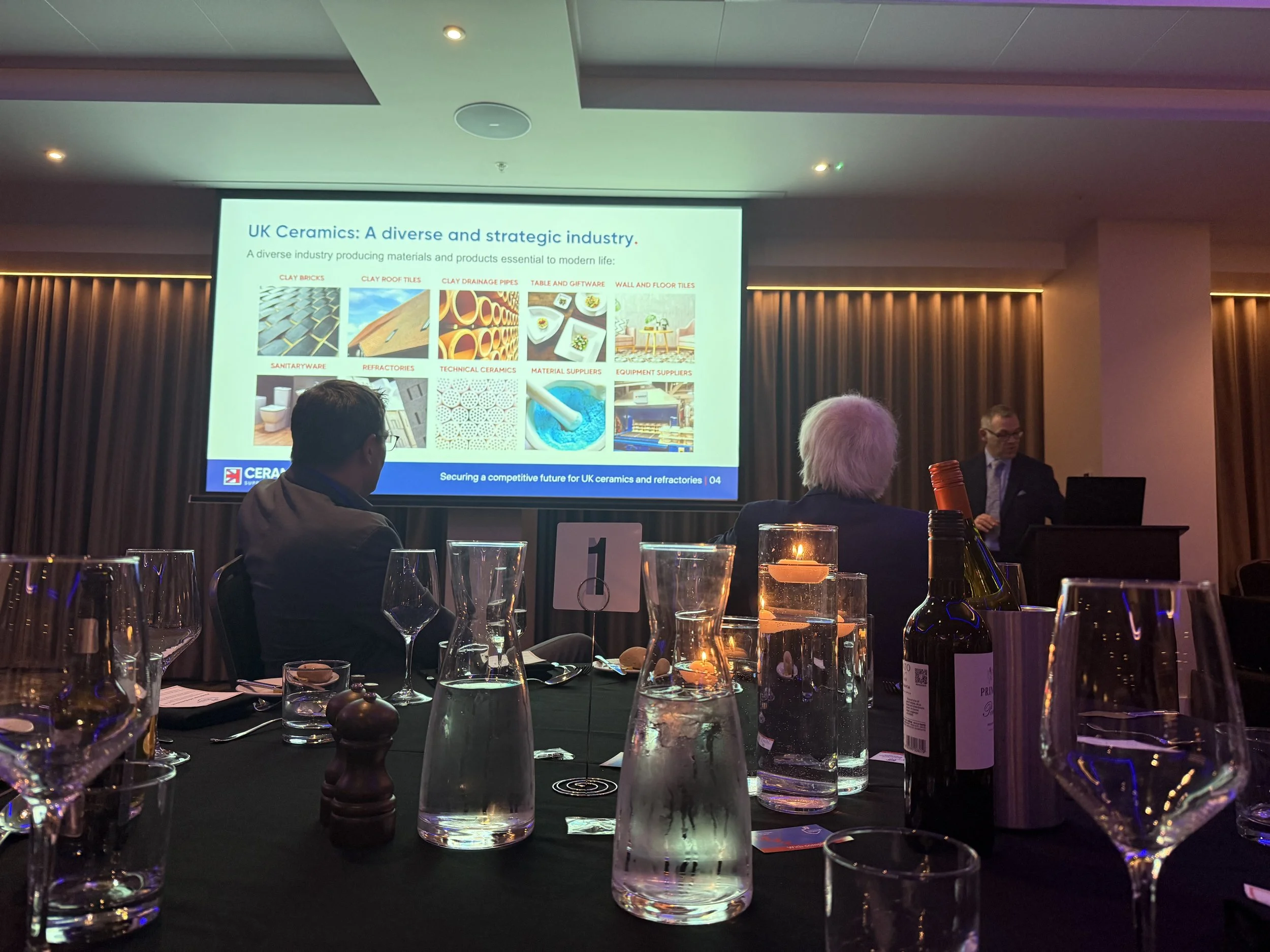
The conference concluded with its annual dinner, where Dr Andrew McDermott, Deputy Chief Executive at Ceramics UK, delivered the evening keynote address, focusing on how the UK can secure a competitive and sustainable future for ceramics manufacturing, including the refractory sector.
Andrew explored some of the most significant challenges facing manufacturers, including high energy and carbon costs, growing international competition and the substantial investment required to decarbonise energy-intensive industrial processes.
However, he also highlighted important opportunities for refractory manufacturers, particularly the role that refractory products can play in enabling the decarbonisation of high-temperature industries.
A key focus of the address was the Government's £120 million Ceramics Industry Support Scheme (CISS), which represents a welcome opportunity to support investment in energy efficiency, decarbonisation and the long-term competitiveness of UK ceramic manufacturing.
Andrew encouraged refractory manufacturers to begin considering potential investment projects now, ensuring they are well positioned to take advantage of the funding when applications open.
Central to his address was a clear message: the UK must maintain the international competitiveness of its manufacturing industries to ensure decarbonisation is driven by investment and innovation, rather than deindustrialisation.
Working Together to Strengthen the Industry
The IRE UK Conference provided a valuable opportunity for industry professionals to exchange expertise, discuss shared challenges and explore opportunities to strengthen the future of refractory manufacturing.
Ceramics UK would like to thank the Institute of Refractories Engineers for the invitation, its collaboration on the introductory training course and the opportunity to contribute to this year's programme.
Through continued collaboration, knowledge sharing and industry engagement, we remain committed to championing the interests of UK ceramic manufacturers and supporting a competitive, innovative and sustainable future for the sector.
Find out more about the IRE UK Conference 2026: https://www.ireng.org/ire-uk-conference-2026-underway-in-sheffield-with-strong-industry-attendance/