
Government delegation hear ceramic manufacturers concerns in site visit
Government officials toured ceramics manufacturers across Staffordshire to see their innovative manufacturing processes and commitment to a lower carbon future and understand more about the headwinds affecting their industry.
The visit, organised by Ceramics UK, saw more than 20 representatives from a spectrum of departments meet leadership teams from three companies, Vulcan Industries in Cheadle, Churchill China in Stoke-on-Trent and Ibstock in Newcastle-under-Lyme.
From tableware used in the finest hospitality environments around the world, the bricks essential to the construction of the UK’s housing stock, and high technology components for sectors including defence, the visitors were given a comprehensive overview of the scope and scale of the sector.
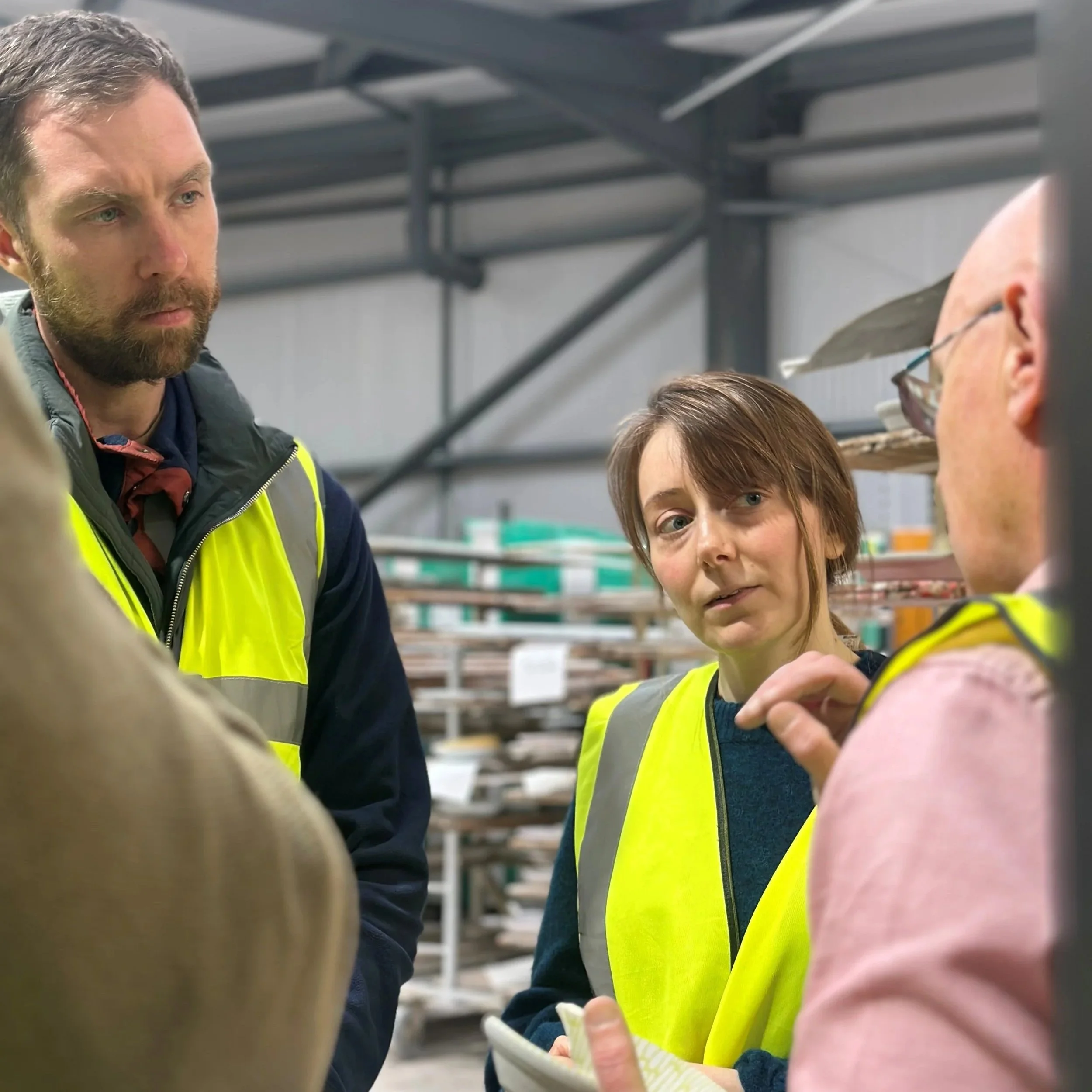
As well as meeting the leadership teams at each of the sites visited, they were also given factory tours to broaden their knowledge of the ceramics industry overall, and to see examples of how businesses are introducing low carbon innovations at scale, such as renewable energy.
Andrew McDermott, Deputy Chief Executive of Ceramics UK, said: “This was a very useful opportunity to bring together people from all strands of Government and other agencies to showcase the value of our sector.
“The visit focused on Staffordshire, but the issues raised are ones that are mirrored at the 150 sites our members operate across the UK.
“We discussed the impact of high and volatile energy costs, uncompetitive carbon taxes and levies, and matters relating to the security and resilience of energy supplies.
“Collectively, all these elements burden UK ceramics manufacturers, which mean that goods made overseas can be priced much more competitively compared than those made in this country.
“At the moment, there are no viable deep decarbonisation technologies on the horizon in the UK capable of meeting the scale, speed, or cost required, and we are asking the Government to consider how the sector is given the opportunity to remain competitive until these technologies can be deployed.”
During the visit, the officials were also made aware of a policy that has seen up to 90 per cent of Ceramics UK’s members face the highest industrial electricity prices globally, under the British Industry Supercharger scheme.
While industries including steel, glass, and chemicals receive up to 90 per cent compensation for electricity network charges, only 10 per cent of the UK’s ceramics manufacturers qualify under the scheme, due to the fact the majority of their factories use gas rather than electric.
Andrew added: “With the majority production methods relying on natural gas, most ceramics manufacturers are not eligible for the scheme.
“As a result, they are left to absorb the highest industrial electricity prices in the G7 and the world.
“The Business Industrial Competitiveness Scheme may give some help with electricity costs in a year or two, but we need better support now.”
As well as broadening the understanding of the UK ceramics industry and providing insight into the challenges and opportunities it faces, the visit also highlighted the sector’s unique characteristics.
Tim Chadwick, Ceramics UK’s Policy Manager, said: “The visit highlighted the UK’s world-leading position in ceramics, and its contribution of more than £2 billion directly to the nation’s economy annually. The sector also creates £600 million in exports and employs over 20,000 people.
“We shared how the industry extends from advanced manufacturing, through to the widely recognised giftware brands that are highly regarded in the UK and around the world. We also saw how technical and advanced ceramics are essential to national security, in sectors including defence.
“This is a unique, successful and significant sector overall. We wanted to show to the visitors that we need the trading environment that enables us to be competitive in domestic and global markets, and to ultimately take that message back to the heart of Government.”
Watch highlights from the tours below.