
The Science Behind Ceramics: Materials Built for the Toughest Jobs
When most people think of ceramics, they picture tableware, tiles or traditional pottery. Yet some of the most advanced engineering materials in the world are ceramics. Hidden inside jet engines, medical implants, armour systems, nuclear facilities and renewable energy technologies, technical ceramics are enabling innovation in some of the most demanding environments imaginable. Ceramics UK represents a sector that stretches far beyond traditional products, encompassing advanced materials that are critical to aerospace, defence, healthcare and energy industries across the UK.
What makes these materials so remarkable is their ability to maintain performance where metals, polymers and composites can struggle. Whether facing temperatures exceeding 1,000°C, highly corrosive chemicals, extreme wear or intense pressure, advanced ceramics provide a unique combination of properties that make them indispensable to modern manufacturing and technology.
Why Are Technical Ceramics Different?
Technical ceramics are engineered materials designed for performance rather than aesthetics. Unlike traditional ceramics, which are often valued for appearance and durability, technical ceramics are developed to deliver specific mechanical, thermal, electrical or chemical properties.
Their advantages include:
Exceptional resistance to heat and thermal shock
High hardness and wear resistance
Excellent corrosion and chemical resistance
Electrical insulation or specialised conductivity
Low weight compared with many metal alternatives
Long service life in aggressive operating conditions
These characteristics arise from carefully controlled raw materials and manufacturing processes, producing highly engineered materials such as alumina, zirconia, silicon carbide and silicon nitride.
Aerospace: Performing at Extreme Temperatures
Few environments are more demanding than aerospace. Components within aircraft engines and space systems must withstand extreme temperatures, rapid thermal cycling, vibration and high mechanical loads.
Technical ceramics play a vital role in aero-engine monitoring systems, temperature sensors, thermocouples, electrical feedthroughs and insulation components because they maintain strength and stability under conditions that would degrade many conventional materials. Ceramics are also increasingly important in advanced ceramic matrix composites, which are helping to meet the performance demands of next-generation aerospace and hypersonic technologies.
As the aerospace sector continues to pursue greater fuel efficiency and lower emissions, lightweight, high-temperature ceramic materials will remain central to future innovation.
Watch the video from Ceramics UK Member Morgan Advanced Ceramics and explore more about how ceramics works behind the scenes connecting us across the world.
Defence: Protection Without Compromise
Modern defence systems depend upon materials that can withstand extreme mechanical stress while minimising weight. Advanced ceramics are widely used in armour systems, where their exceptional hardness enables them to absorb and dissipate the energy from ballistic impacts.
The same material properties that make ceramics ideal for armour also support applications in sensors, electronics, guidance systems and high-temperature components used in defence platforms. Their reliability under harsh operating conditions makes them invaluable in mission-critical applications where performance simply cannot fail.
Medical: Improving Patient Outcomes
Technical ceramics are also transforming healthcare, from life-changing implants to the diagnostic equipment used every day in hospitals. Bioceramics have become established materials in orthopaedic and dental implants due to their outstanding biocompatibility, wear resistance and longevity.
Ceramic materials can be used in joint replacements, dental restorations and specialist medical equipment, helping to deliver long-term performance inside the human body. Their ability to resist corrosion and degradation makes them particularly valuable in applications where reliability over many years is essential.
Beyond implants, advanced ceramics also play a critical role in modern medical imaging and diagnostics. Piezoelectric ceramics enable ultrasound scanners by converting electrical signals into sound waves, while ceramic components are used within X-ray and CT imaging systems to provide the electrical insulation and high-performance characteristics needed to operate safely and accurately.
As medical technologies continue to evolve, advanced ceramics are enabling increasingly sophisticated precise and durable healthcare solutions, supporting earlier diagnosis, improved treatment and better patient outcomes.
Energy: Supporting the Transition to Net Zero
The energy sector presents some of the harshest operating conditions encountered in industry. Technical ceramics support conventional energy generation, nuclear power and a growing range of renewable technologies.
In nuclear environments, ceramics provide thermal stability, chemical resistance and long-term durability. In renewable energy applications they contribute to high-performance systems designed to maximise efficiency and reliability. Across the wider industrial landscape, ceramic refractories underpin essential manufacturing processes, including steel and glass production, helping to maintain the UK's industrial capability.
As the UK pursues decarbonisation and energy security goals, advanced ceramics will continue to play a crucial role in enabling cleaner, more efficient technologies and Ceramics UK members are at the forefront of this.
Ceramics UK Member Case Studies
Building Digital Twins Through High-Resolution Dilatometry
One of the most exciting developments in advanced ceramics is the growing use of digital manufacturing technologies.
At The AMRICC Centre, researchers have demonstrated how high-resolution dilatometry can support the development of digital twin models for ceramic manufacturing. The project aims to create accurate digital representations of ceramic deformation during firing, enabling manufacturers to predict how components will behave under different firing profiles, materials and geometries.
This is particularly valuable because ceramic materials can display highly variable behaviour during high-temperature processing, making them notoriously difficult to model accurately.
The research team used dilatometer testing to generate thermal expansion and shrinkage curves, together with data on sintering onset and densification rates. This information formed the foundation of a simulation engine capable of predicting final component dimensions and reducing scrap arising from tolerance deviations.
Authored by Dr Sav Savva and Dr Samira Bostanchi, the work was undertaken at The AMRICC Centre alongside MICG partners Morgan Advanced Materials and Lucideon, with support from UK Research and Innovation through the Strength in Places Fund Programme.
The project highlights how advanced ceramics manufacturing is embracing Industry 4.0 technologies, combining materials science with digital engineering to improve efficiency, accuracy and sustainability.
Read more on this case study here.
Advanced Filtration in Corrosive Industrial Environments
Mantec Technical Ceramics recently secured a contract worth approximately £300,000 supporting a major £250 million capital project at one of Europe's leading precious metals processing facilities.
The project showcases the capabilities of advanced ceramics in highly corrosive and demanding industrial environments. Mantec's proprietary Star-Sep ceramic membranes will be deployed within specialised filtration systems designed to support efficient crossflow microfiltration processes. According to the company, the star-shaped channel design increases filtration area by 20% compared with equivalent circular channels, while reducing flow requirements and energy consumption.
The system is specifically engineered to withstand aggressive chemical conditions, combining highly durable ceramic membranes with PTFE-lined housings that provide exceptional chemical resistance and thermal stability. The project demonstrates how technical ceramics can deliver both performance and sustainability benefits in challenging process industries.
Read more about Mantec Technical Ceramics here.
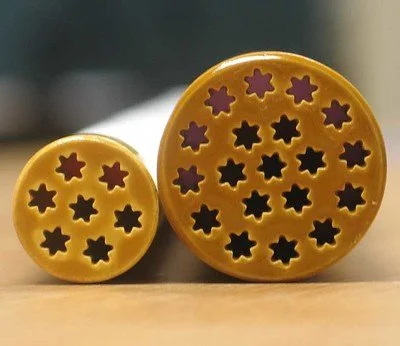
Mantec Star-Sep Ceramic Membranes
A Foundation Industry for the Future
Advanced ceramics may often operate behind the scenes, but their impact is impossible to ignore. From helping aircraft fly more efficiently and protecting defence personnel, to supporting life-changing medical treatments and enabling energy transition technologies, technical ceramics are solving some of the most complex engineering challenges of our time.
As UK manufacturers continue to innovate, invest in digital technologies and develop next-generation materials, the science behind ceramics is becoming ever more important. Far from being a niche sector, advanced ceramics are a foundation of modern manufacturing and an essential contributor to the UK's future industrial success.