
Meet the team: SHE Director, Lauren Darby
Tell us a bit about yourself
I’ve always sat at the intersection of science and creativity. I nearly took the art and design route, but I eventually chose Environmental Science for my undergraduate degree, a choice driven by both career prospects and a genuine passion for the natural world. That creative side hasn't left me, though; it’s something I still pursue outside of work.
My career really began to take shape during my degree when I took a placement year at the Peak District National Park.
I worked at the Peak District National Park Centre across a range of areas, including outdoor education and supporting field trips for children from primary school age to A level students.
After graduating with a BSc Hons Degree in Environmental Science I moved to North Wales to work in Eryri (Snowdonia), continuing that focus on practical ecology.
I then transitioned into academia at Cardiff University, where I spent several years as a Research Associate, also studying for an MSc in Sustainability, Planning and Environmental Policy. During this time, I worked on an environmental supply chain project and also at the ESRC Centre for Business Relationship, Sustainability and Society carrying out research on a range of topics from social ethical and environmental disclosure to the regulatory and supply chain management of waste electrical and electronic equipment. While I'm proud to have co-authored a few academic papers, I eventually felt the pull to get back to more practical, hands-on work.
That desire led me to Groundwork West Midlands, where I worked as an Environmental Consultant and managed the Business Support Team, helping local companies improve their green performance. Finally, about 13 years ago, I joined Ceramics UK as Sustainability Manager.
It’s been a fascinating journey, moving from the 'micro' level of ecology in National Parks to the 'macro' level of supply chains, policy and regulation.
What’s your role, and what do you enjoy most about it?
I’ve been with the team for over a decade, so my remit as SHE Director has grown to cover a lot of areas for our member support. I tend to look at my work as three main pillars:
I facilitate our Land, Property, and Minerals Committee, which meets quarterly. My role there is essentially keeping an eye on what’s coming down the road so our members aren't caught off guard. We cover a raft of issues: from Planning Reform and Biodiversity Net Gain to matters like Business Rates and Landfill Tax. It’s about giving our members a space to discuss these shifts, so I can then represent the sector’s interests in stakeholder discussions and formal consultations.
I also support our tableware manufacturers (BCGTMA). This includes specialised sector work on topics such as Food Contact Materials regulation and product standards. I support the quarterly meetings there, ensuring everyone is up to speed on matters specific to the industry
Another main area of focus in my role is Health & Safety, this ranges from, chairing the Pledge Board and Health & Safety Committee through to leading on Ceramics UK’s annual Pledge Conference and Awards. A fantastic initiative for the sector that I am extremely proud of. As part of this area of work I also co-ordinate is the Clay Quarry Competence Group. This industry led group works closely with the Institute of Quarrying and the Heavy Clay Technology Association to support members with clay quarry manager competency and CPD needs, as required under the 1999 Quarry Regulations.
For example, at the moment, we are focusing on Emergency Preparedness and Response, sharing sector knowledge and insight and drafting bespoke sector guidance to ensure our clay quarry managers have practical, relevant safety information that is relevant to clay quarries. It’s all about providing support and being proactive rather than reactive.
I love the variety. No two days are the same, and I enjoy the challenge of 'horizon scanning', working with others to understand complex new policy and regulation, like proposed planning reforms - engaging with members and stakeholders to understand practical implications and represent sector views, and then supporting members to implement them. It’s rewarding to know you’re helping protect the long-term health of the UK ceramics sector.
You’ve seen the Pledge Scheme grow for many years. How has the industry’s definition of "Safety" evolved from simple injury prevention to the "holistic" health and wellbeing focus we see today?
I’ve been involved with the Pledge Scheme for about a decade now, stepping into a more central role after my predecessor, Francis retired. Looking back at the 25 years since the scheme began, the evolution has been remarkable.
Originally, the Pledge was a 'call to action' from the government. At that time, the industry was heavily focused on safety, with targets for accident and lost time injury reduction. This has evolved over time, with health and safety leadership and culture now a key workstream. Although our sector has always had a strong focus on health due to issues such as the management of Respirable Crystalline Silica (RCS) and, historically, the use of lead pigments, health has certainly moved up the agenda in recent years and will be a focus for the next phase of the Pledge scheme. This has been a natural progression and although safety will remain a core focus, health and wellbeing will continue to grow in prominence.
Can you share what the future for the next phase of the Pledge?
While we are still in the early stages of developing the next phase of Pledge, we know that it will mark a significant shift in our approach. After 25 years, we’ve reached a point where our members have a very solid grasp of the 'safety basics', they know what they need to do to stay compliant.
Our goal for the next phase is to build on that foundation by moving from compliance to culture. We’ll be taking a deeper dive into more complex, 'human' areas like leadership and organisational culture, with a focus on mental health and wellbeing.
Key to this new phase will be a sharpened focus on communication and peer-to-peer engagement. We’ve found that the greatest value doesn't just come from Ceramics UK talking to members, but from members talking to each other, sharing challenges and co-creating solutions.
We also recognise that everyone is more stretched for time than ever before. Therefore, the next phase will be highly targeted. We want to provide a more focused, high-value framework that allows members to tackle the most difficult industry challenges together. It’s about being smarter and more collaborative in how we drive the next generation of safety standards.
Is there a project or moment you’re most proud of?
There are two things that really stand out for me. First, the work we’ve done with sustainability reporting in the brick sector. It has been a 'steady burn' over many years, but seeing how this has evolved and how the industry works together, tracks and reports its sustainability performance is very rewarding. It’s a testament to what can be achieved through consistent, long-term commitment.
However, if I had to pick a defining moment, it would be picking up the baton for the Pledge Scheme. Organising the annual conference and awards for so many years is no small feat, but it’s more than just an event; it’s the central pillar of our health and safety community.
Taking over that mantle, ensuring the scheme didn't just maintain its momentum but evolve, has been a real highlight for me. Seeing the sector come together every year to celebrate progress, and knowing I’ve helped facilitate that culture of shared improvement, is what I’m most proud of. I’m now really excited to be leading that legacy into the next chapter of Pledge.
What’s the most important lesson you’ve learned in your career so far?
For lessons learned, the biggest is perseverance. In policy and sustainability, you have to stay the course to see real change. Secondly, you don't need to know everything. True leadership is about knowing who to ask and bringing the right experts together. Recognising that you don't have all the answers, but knowing how to find them, is important!
You’ve arranged the Pledge Conference & Awards for many years. Is there one particular winner or innovation that stands out as a "game-changer" for the UK ceramics sector?
One standout success story is Vulcan Refractories, one of our SME members. When I first started working on the Pledge, Francis explained that they had asked for help with health and safety and, through peer support and the Pledge framework, had transformed into an industry leader. It’s a brilliant example of how a smaller company with limited resources can achieve world-class standards through sheer dedication.
I’m also often moved by the smaller, person-led projects. In recent years, we’ve seen individuals, particularly in mental health and wellbeing, go above and beyond to support company initiatives and their colleagues. Seeing that level of personal commitment to improving the lives of others in the workplace is incredibly powerful.
Finally, our new Emerging Talent Award has been a real game-changer. It’s shifted the spotlight onto the next generation, and seeing the fresh energy and innovation coming through the sector has been amazing.
What’s your favourite thing about working for Ceramics UK?
My favourite thing is the ability to see the 'full picture' of the industry. Because my role covers sustainability, land, property and minerals, and health and safety, I get to see how different pieces of the puzzle interlink, from the raw material extraction in the quarries right through to the finished product.
I find it incredibly satisfying to connect the dots. For example, I might be in a sustainability meeting discussing the circular economy of brick and then move to a Land and Minerals committee to discuss planning reform and the practical implementation of quarry restoration and Biodiversity Net Gain. Then, I’ll attend a quarry seminar and see how cutting edge technology, like drones, is being used to survey sites from an environmental and health and safety perspective.
Having that 360-degree view is very valuable. It means I’m not just looking at one isolated issue; I get to see the interplay between different aspects of the sector. It’s that variety and the chance to see a project through from a high-level policy down to the practical reality on the ground that makes the work so engaging.
What exciting events or projects do you have coming up?
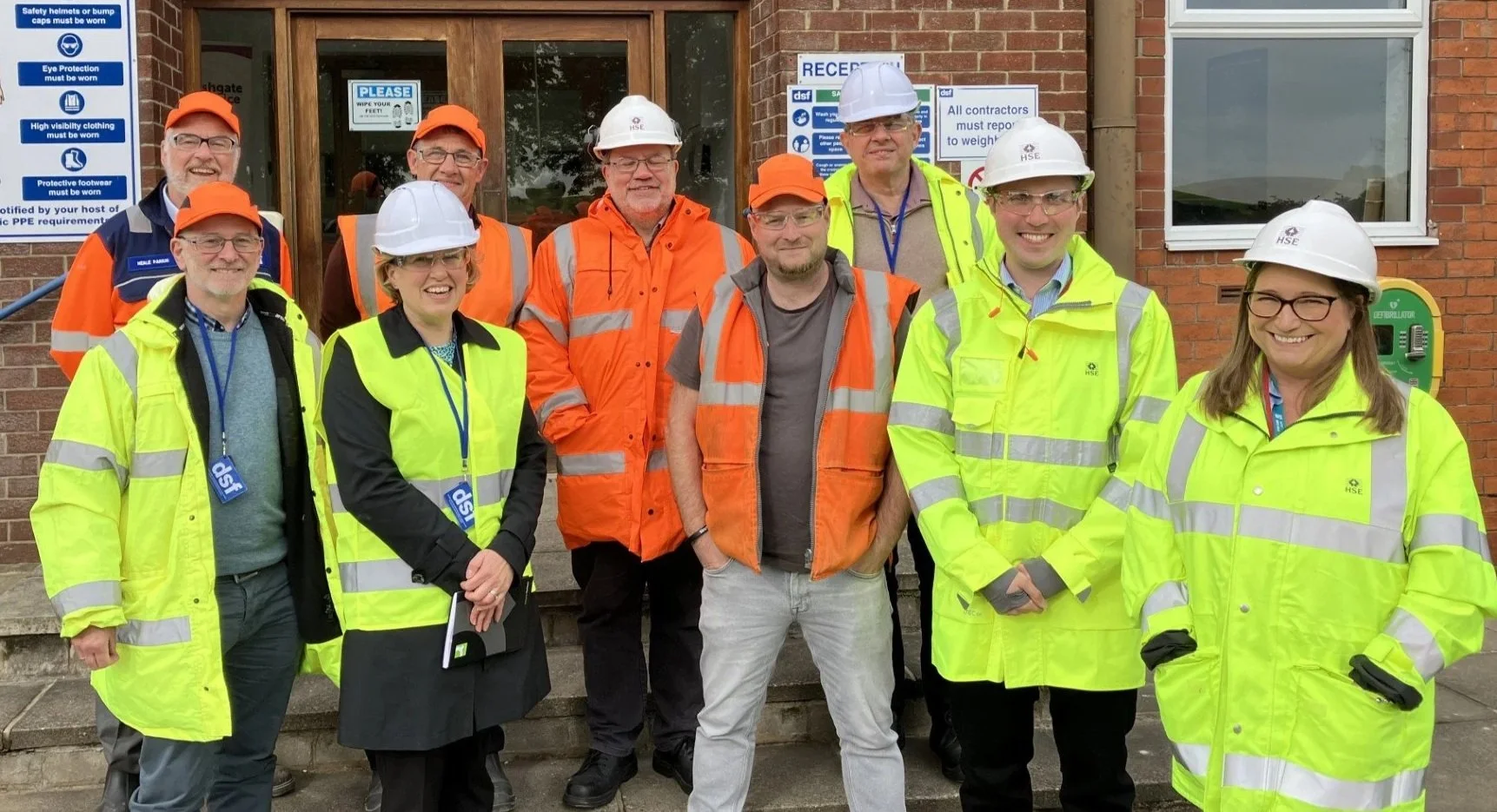
The most significant project on the horizon is definitely the launch of the next phase of the Pledge, but I am also currently organising a major site visit for the Ministry of Housing, Communities and Local Government (MHCLG).
We are hosting around 20 government officials at a member site to showcase the scale and importance of the ceramics sector. It’s a vital opportunity to advocate for the industry, specifically regarding planning reform and our contribution to the UK economy and national house-building targets.
What makes this project particularly exciting is the chance to demonstrate the longevity and life cycle of our quarry and manufacturing sites, which are active for many decades, unlike some other types of quarrying. We’ll be taking the officials through the entire process, from mineral extraction and factory production to the long-term restoration of the quarry. It’s a powerful way to show the government how we manage land responsibly over 30 or 40 years or more, creating lasting environmental and amenity benefits.
How would you describe the team in three words?
Resilient, dedicated and supportive.
You bring together the HSE, Trade Unions, and manufacturers. What is your secret to maintaining a "one-team" culture across so many different groups?
There isn't a magic formula, but if I had to name a 'secret,' it would be diplomacy and empathy. I’ve always made it a priority to understand the different motivations and pressures each group is under. Whether it’s the HSE, trade unions, or our own members, everyone comes to the table with a different perspective.
The key is building mutual trust. In our sector, that often means navigating sensitive relationships where you have to be very aware of what to share and when. We work closely with regulators, but we also respect the boundaries of that relationship. It’s a delicate 'give and take' that requires a lot of listening and careful thought before acting.
Can you share a fun fact about yourself that might be surprising?
I'm going to be taking the train from Cheshire to Sicily at Easter.
Do you have a go-to tip or hack that helps make your day run smoothly?
My essential habit is a walk before work and at lunchtime. It’s my best tool for mental clarity. The morning walk lets me map out the day’s priorities, and the midday break provides a necessary 'reset.'
Do you have a fun fact about the industry?
A fun fact is that the word 'porcelain' actually translates to 'little pig.'
It derives from the old Italian word porcellana, which was the name for the cowrie shell. Because the ceramic material has that same smooth, translucent quality as the shell, which in turn was thought to look like a small pig, the name stuck. It’s a nice little nod to how closely our industry’s history is linked to the natural world!
Given your work with minerals, what’s the most interesting thing you’ve ever learned, about the raw materials we dig out of the earth?
The most fascinating thing I’ve learned is that our quarries are essentially time capsules. A perfect example is Northcot Brick; their quarry is actually a Site of Special Scientific Interest (SSSI) because it’s so geologically rich.
When I visited a few years ago, I was amazed to see big pieces of ammonites in the clay on the conveyor belt. In fact, the site is so significant that a new species of Plesiosaur was discovered there back in 2000.
It’s a brilliant reminder that while we view these sites as sources of raw materials for manufacturing, they are also incredibly important windows into our planet’s history.